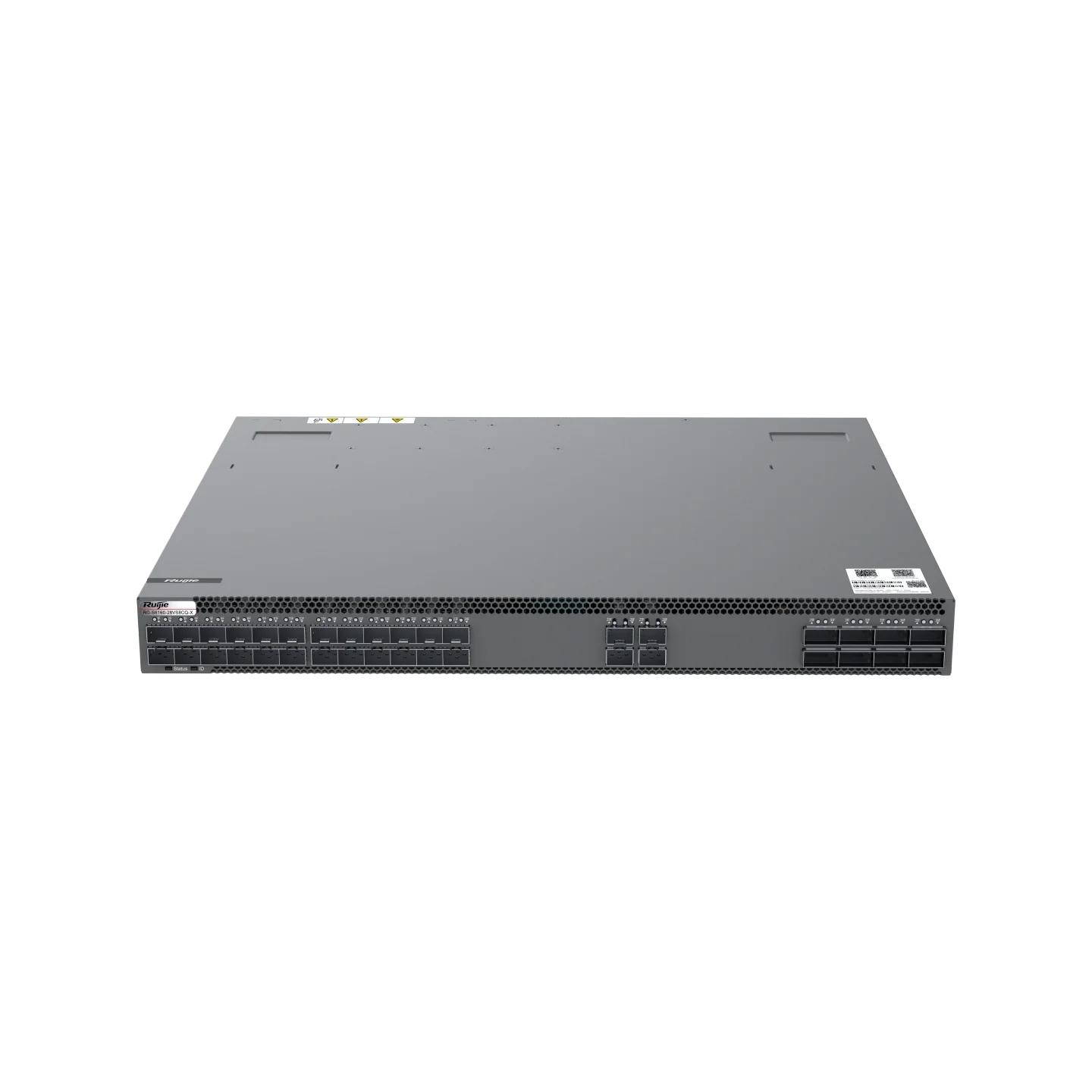
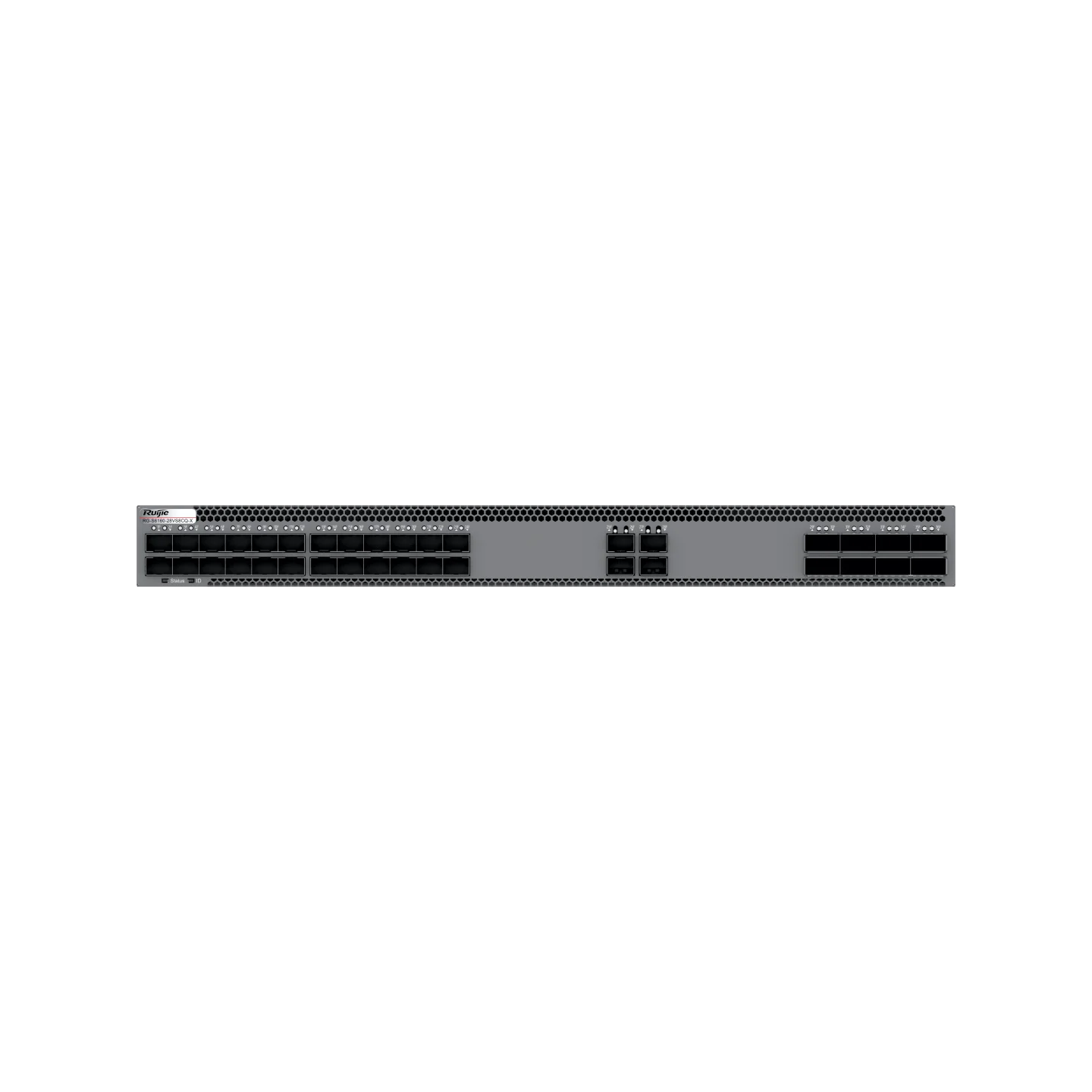
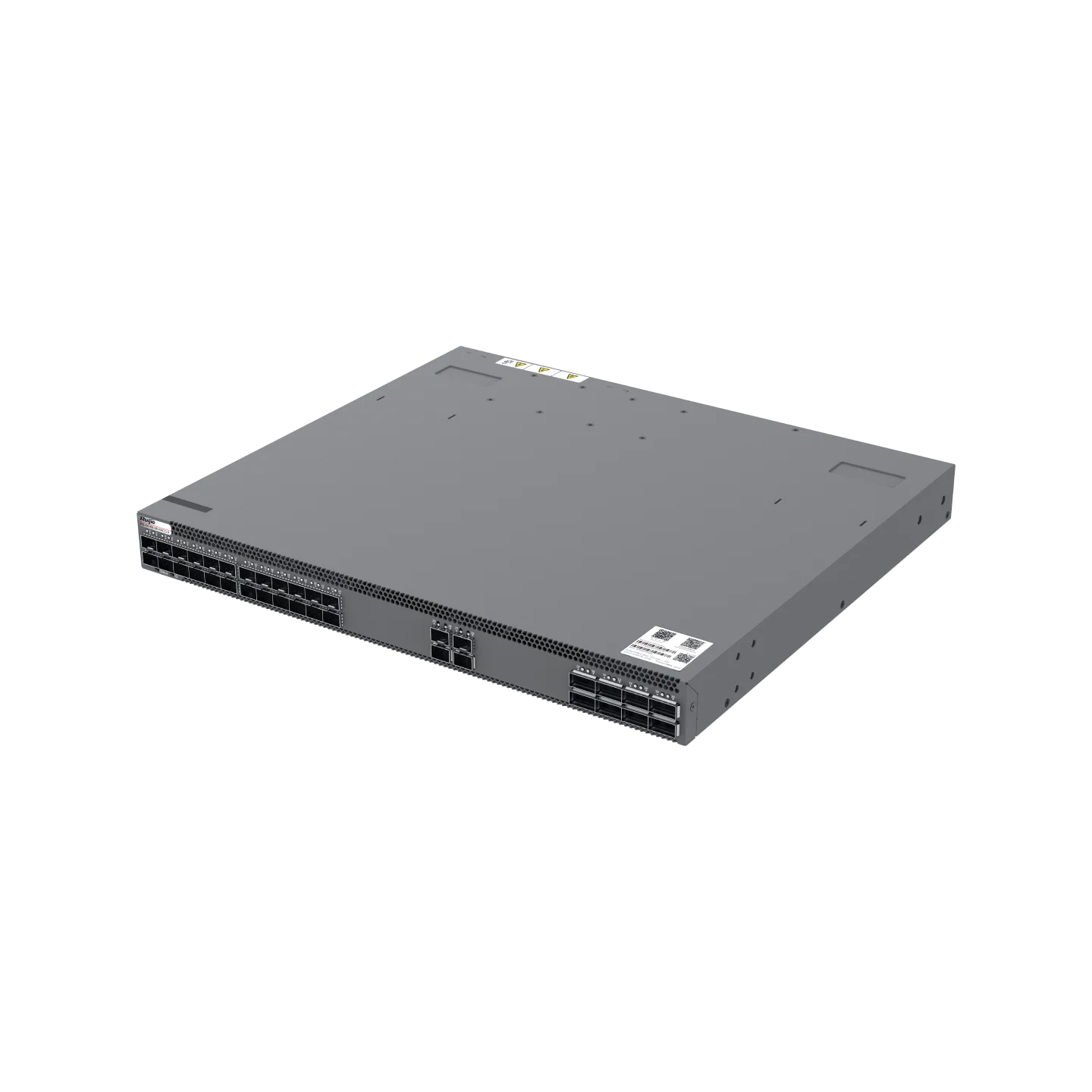
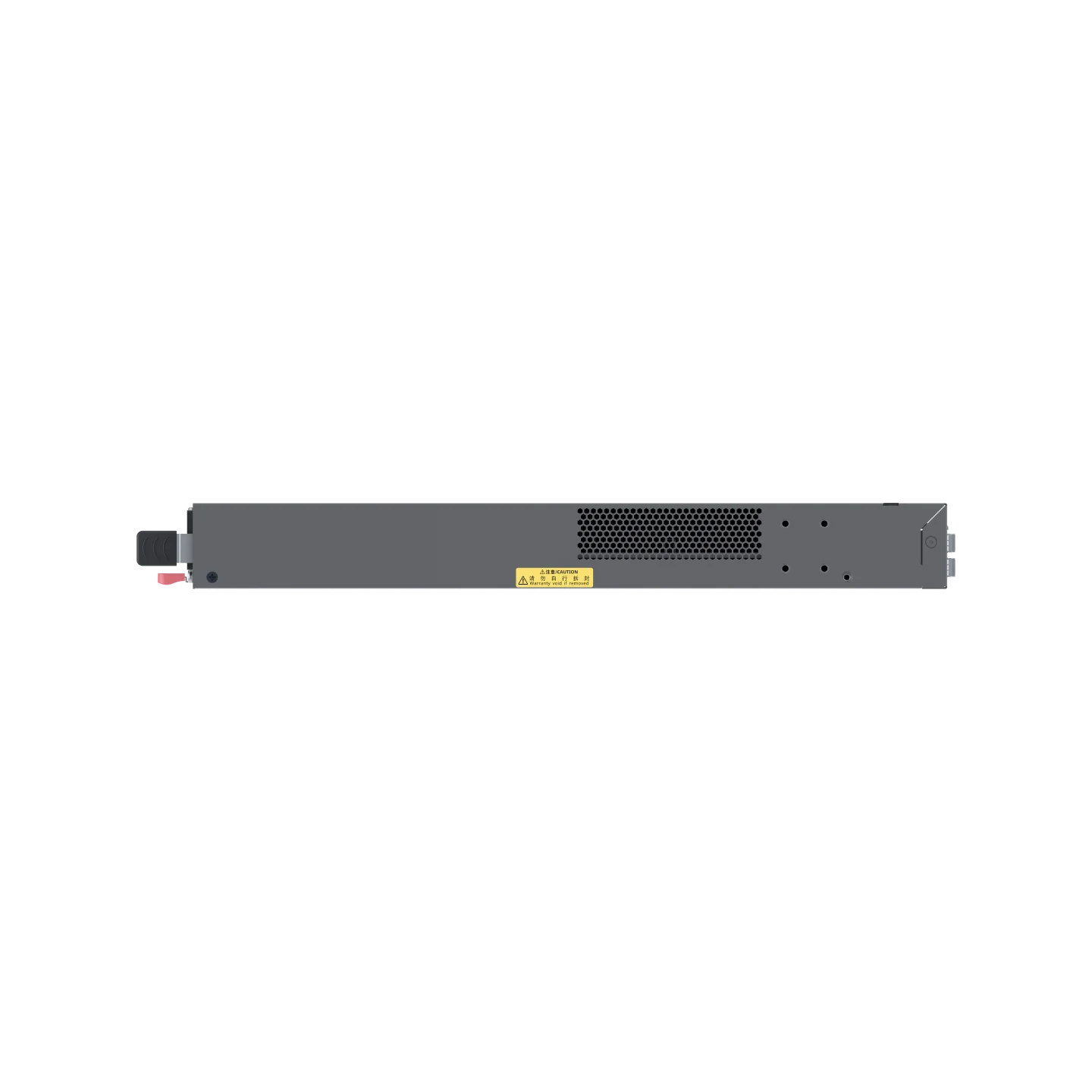
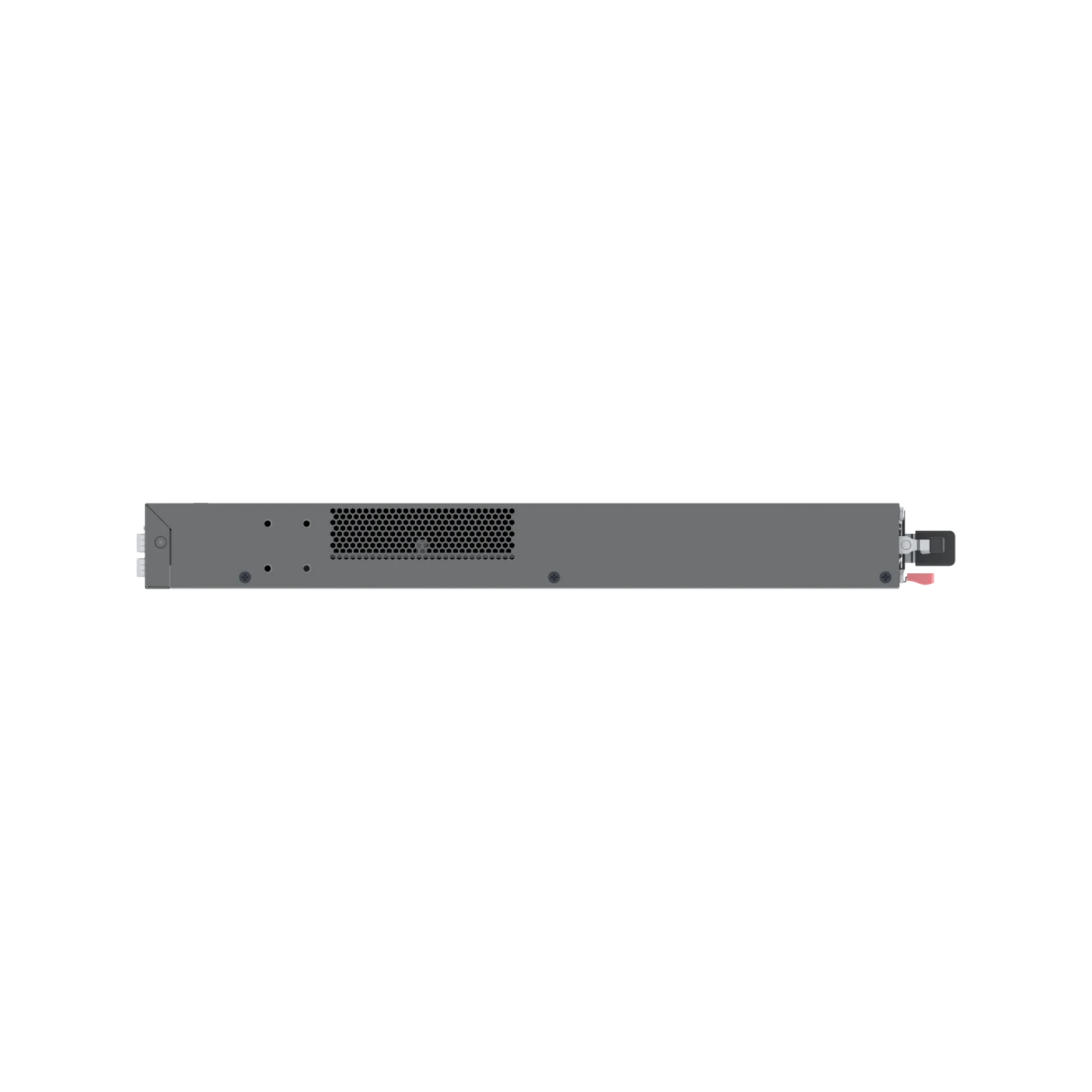
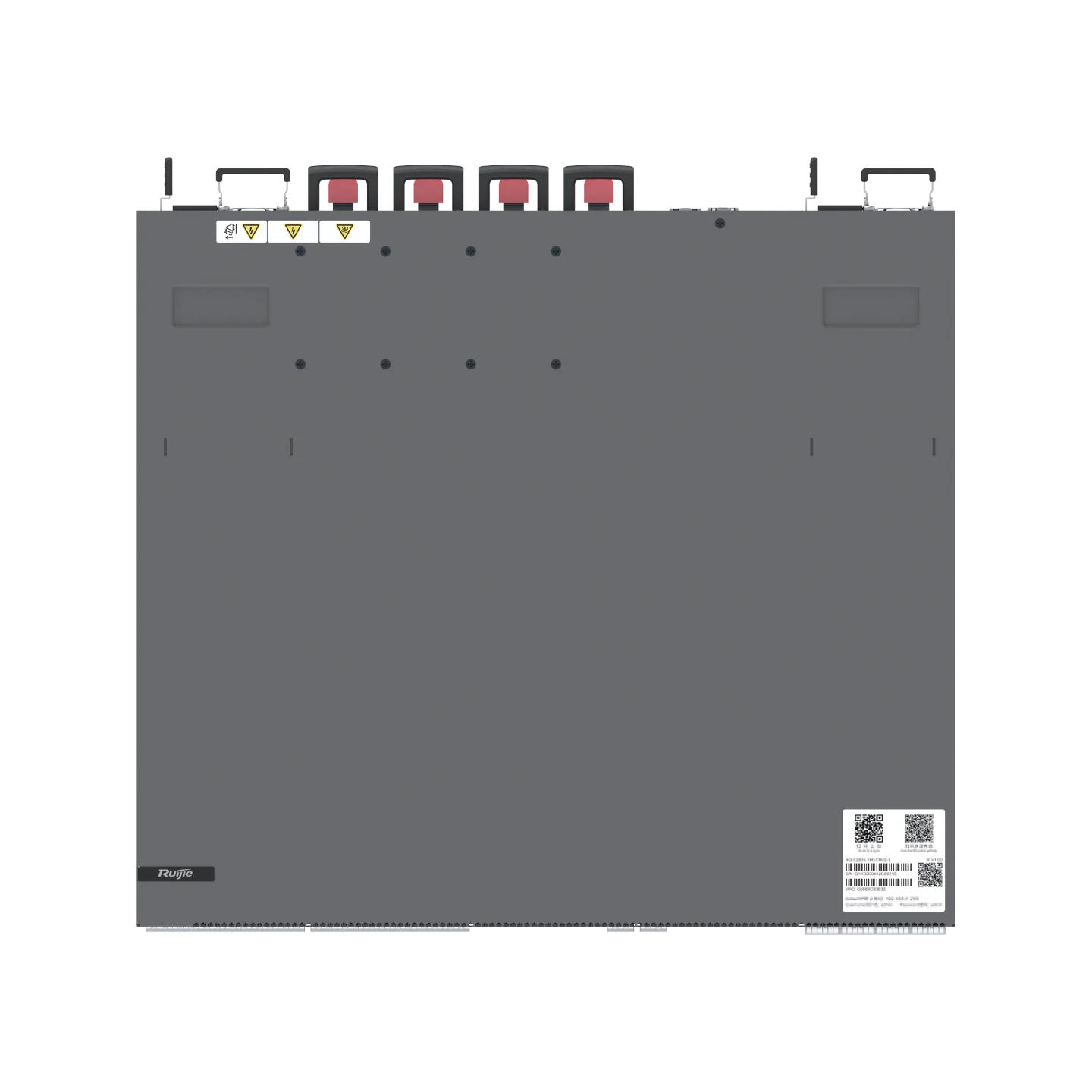


Layer 3 10GE All-Optical Core/Aggregation Switch
RG-S6160-28VS8CQ-X
Recommended for the aggregation layer of large-sized networks and core layer of small and medium-sized networks, the RG-S6160-28VS8CQ-X supports 28 x 25GE service ports (enabled via license) and 8 x 100GE uplink ports, delivering flexible access capabilities to meet high-performance network requirements and enable a smooth migration to 10GE campus networks.
VSU for Flexible Networking and High Performance
Fault Recovery in Milliseconds
High Scalability
Simplified Networking
When the aggregate link between the VSU and peripheral devices fails, traffic can switch over in milliseconds, ensuring uninterrupted network services.
Multiple Hardware-Level Protections for Continuous Operation
Hot-Swappable Power Modules + Smart Fan Modules
Hardware-Level Dual Boot
Optical Port Fault Isolation
Power modules can be replaced without interrupting network services, while intelligent fan speed adjustment ensures efficient heat dissipation for enhanced system protection.
Layer 3 Routing Capabilities for Diverse Services and Efficient and Reliable Transmission
IPv4 and IPv6 Protocols
Rich Multicast Protocols
Static and Dynamic Routing
Hardware-based dual-stack forwarding supports high-speed traffic exchange and facilitates a smooth transition from IPv4 to IPv6 in campus networks, greatly improving address capacity and network security.
Various Network Security Policies and Real-Time Monitoring, Delivering Enhanced Network Robustness
CPU Protection Policy (CPP)
Network Foundation Protection Policy (NFPP)
Large volumes of disordered traffic are processed by CPP before reaching the CPU, preventing direct attacks on the CPU, ensuring stability under high-load operation, and effectively improving device security.
Ruijie Unified Networking Central (RG-UNC)
Visualized Management, Automated and Effortless Operations
RG-UNC, a unified visual management platform, supports real-time monitoring of key devices and links, fine-grained alarms, centralized configuration backup and recovery, network-wide management, plug-and-play, and rapid deployment, enhancing O&M efficiency.