Ruijie Unveils AI-Ready Healthcare Network at RSUP Dr. Kariadi
Ruijie Unveils AI-Ready Healthcare Network at RSUP Dr. Kariadi
SEMARANG, INDONESIA, September 6, 2026 — At the RSUP Dr. Kariadi 101st Anniversary Medical Summit held at the Gumaya Tower Hotel in Semarang, Ruijie Networks EBG presented a strategic keynote address on building AI-Ready network foundations to power the next decade of intelligent healthcare across Indonesia.
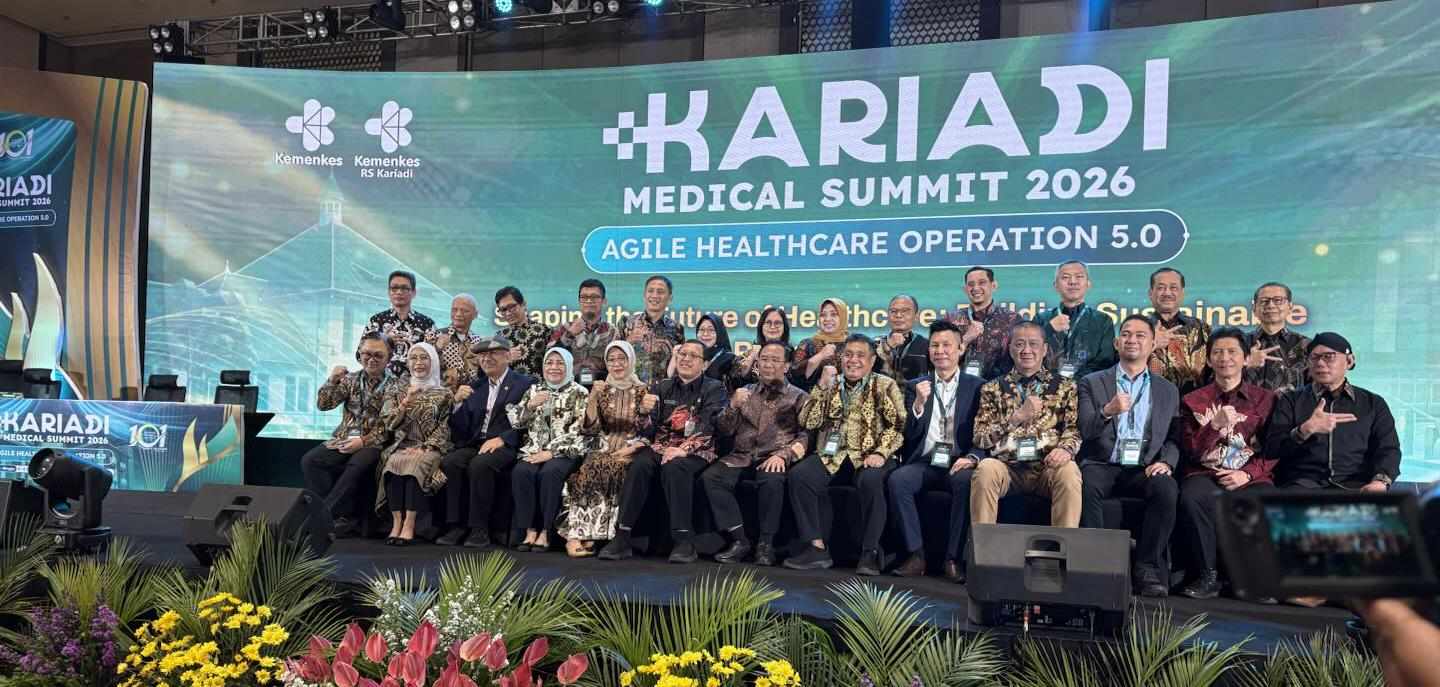
Addressing hospital executives and healthcare leaders across Indonesia, Ruijie emphasized that the true differentiator for future smart hospitals lies in network stability and underlying system architecture.
Beyond AI Models: The Real Challenge Is Stable Operation
Deploying artificial intelligence in healthcare represents a fundamental shift for modern medical institutions. Today, AI is no longer a question of availability, but rather whether it can run stably across critical medical workflows. The competition among future smart hospitals is not defined solely by AI model capability, but by the network foundation that sustains continuous, real-time AI operations.
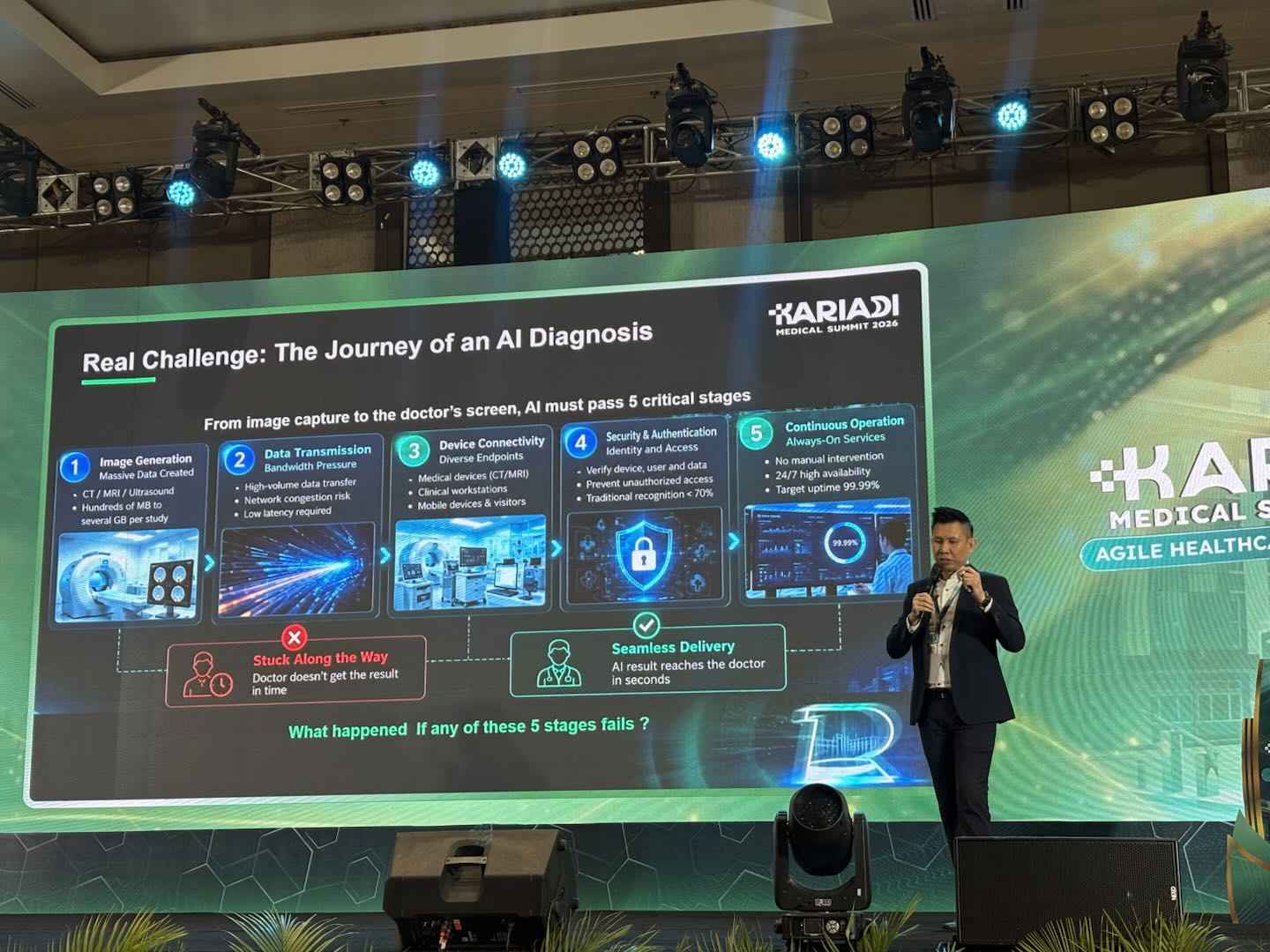
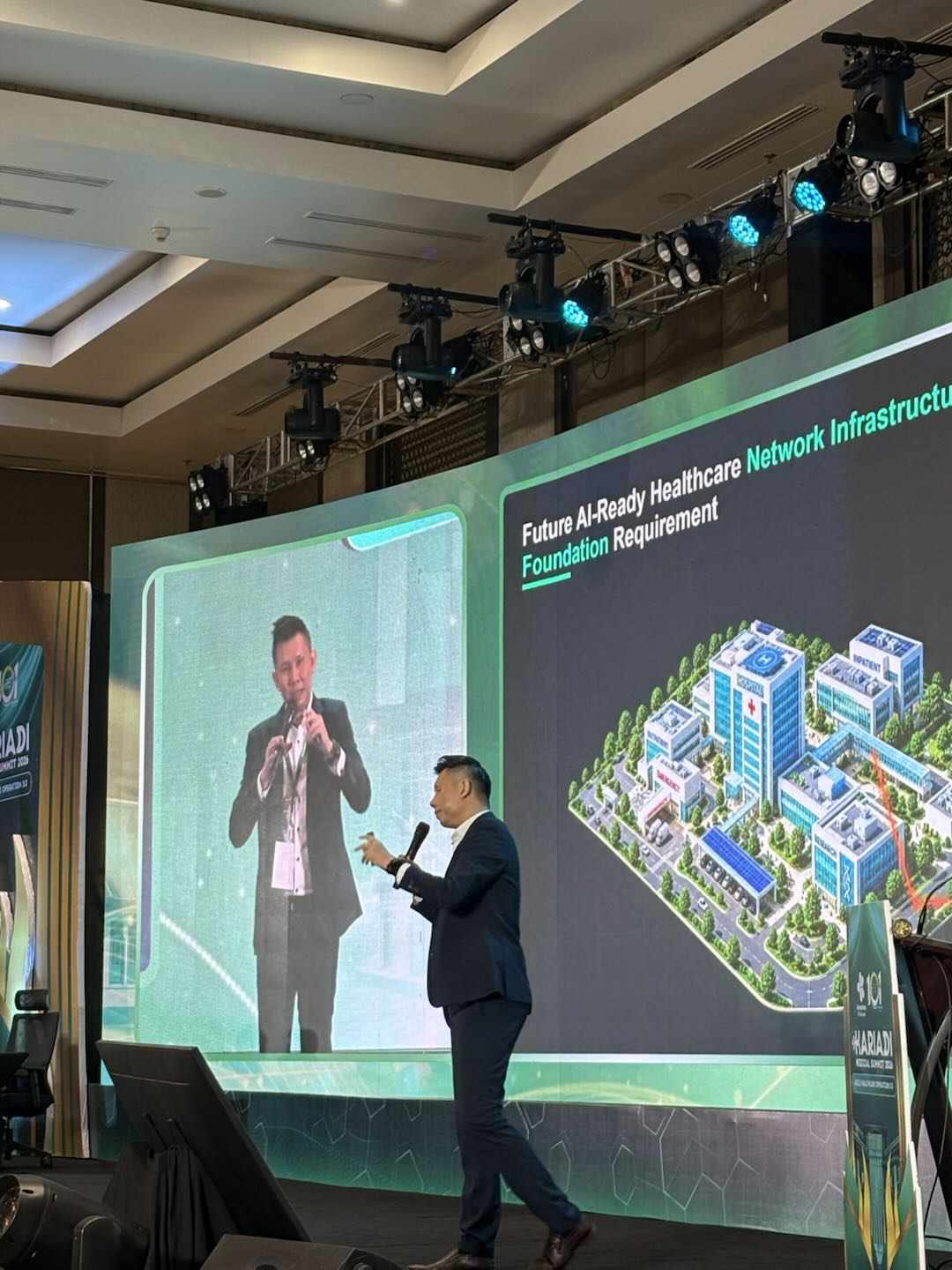
During Steven Ong's keynote address, he pointed out a fundamental shift in how healthcare institutions must approach artificial intelligence.
While advanced algorithms power applications like clinical imaging analysis, smart triage, operating room scheduling, and fraud detection, these applications depend entirely on an infrastructure that guarantees zero service interruptions, low latency, and continuous data throughput.
One Hospital, Three Layers: A Strategic Framework
To help hospital leaders assess their readiness for AI, Ruijie introduced its "One Hospital, Three Layers" architecture framework:
1. AI Application Layer (Hospital-Led): Encompasses clinical and operational tools such as AI imaging support, smart triage, bed and OR scheduling, and fraud detection. Success at this layer requires a comprehensive hospital master plan.
2. Operations & Management Layer (Joint Build): Manages data governance, unified O&M platforms, security, and compute scheduling. Establishing this middle layer requires a thorough network and system survey.
3. Infrastructure Layer (Ruijie-Led): Formed by the core network, compute, storage, and data center foundation. A self-check assessment ensures the base can handle real-time AI workloads.
While AI applications operate on the top layer, the two underlying layers ultimately determine whether those applications run at all. While the choice of application layer remains with the hospital, Ruijie brings over twenty years of dedicated ICT expertise to build and sustain the foundational layers beneath.